
What Evidence Is Important in a Commercial Truck Accident Case?
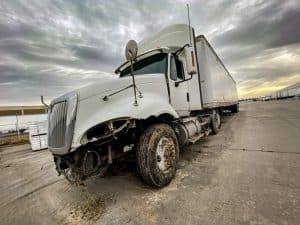 Commercial truck accident claims are rarely decided by one photograph or a single statement from the drivers involved. A meaningful investigation may require records from the trucking company, data stored within the truck, information from independent witnesses, and documentation showing how the collision affected the injured person’s health and finances.
Some of this evidence may be difficult—or impossible—to replace if it is deleted, overwritten, repaired, or discarded. For that reason, identifying and preserving evidence should begin as early as possible after a serious truck accident.
At Banner Attorneys, we investigate commercial vehicle accidents in Fontana and throughout Southern California. Our goal is to determine not only what happened on the road, but also whether the driver, trucking company, maintenance provider, cargo loader, broker, or another party contributed to the crash.
Photographs and Video From the Accident Scene
Images taken at the scene can preserve details that disappear once the vehicles are moved and the roadway is cleared. Helpful photographs and videos may show:
- The final resting positions of the truck and other vehicles
- Damage to each vehicle
- Skid marks, tire marks, debris, or fluid on the roadway
- Traffic signals, signs, lane markings, and construction zones
- Weather, lighting, and road conditions
- Visible injuries
- The truck’s license plate, trailer number, company markings, and U.S. Department of Transportation number
Dash cameras, nearby security systems, traffic cameras, and videos recorded by witnesses may provide an even clearer account. Because many private businesses routinely overwrite surveillance footage, these recordings should be requested promptly.
The Police or California Highway Patrol Crash Report
A law enforcement report may identify the drivers, vehicle owners, insurers, witnesses, roadway conditions, apparent violations, and the officer’s initial observations. It may also contain diagrams, measurements, photographs, or statements collected at the scene.
When the California Highway Patrol investigates a collision, an involved party or authorized representative may request a copy of the report through the CHP crash-report system.
A police report does not necessarily resolve every disputed issue. However, it can provide a useful starting point for a broader investigation and help identify additional evidence that should be obtained.
Electronic Logging Device Records
Many interstate commercial drivers are required to use electronic logging devices, commonly called ELDs. These systems synchronize with the truck’s engine and record information related to driving time and hours of service.
According to the Federal Motor Carrier Safety Administration, an ELD may capture data such as:
- Driving time
- On-duty and off-duty status
- Engine hours
- Vehicle movement
- Miles traveled
- Date, time, and location information
These records may help determine whether a driver exceeded federal service limits, took required rest periods, inaccurately logged time, or continued driving while fatigued.
Federal regulations generally require carriers to retain records of duty status and supporting documents for at least six months. That relatively short retention period is one reason an attorney may send a preservation notice soon after a collision.
The Truck’s Electronic Control Module and Telematics Data
Commercial vehicles may contain electronic systems that record information about how the truck was being operated. Depending on the vehicle and its equipment, available data may include:
- Vehicle speed
- Brake application
- Throttle position
- Engine RPM
- Seat belt status
- Sudden deceleration
- GPS location and route history
- Diagnostic warnings or mechanical fault codes
This information is sometimes casually called “black box” data, although commercial trucks may contain several separate electronic systems rather than one standardized recorder.
The data may help experts reconstruct the seconds leading up to the impact. It could show, for example, whether the driver braked before the collision, whether the truck was traveling too fast for conditions, or whether a mechanical warning appeared before the crash.
Driver Qualification and Employment Records
A truck driver’s personnel and qualification records may reveal whether the carrier used reasonable care when hiring, training, and supervising the driver. Relevant documents may include:
- The driver’s commercial license and endorsements
- Employment application and work history
- Driving record
- Medical certification
- Training and safety records
- Prior collisions or traffic violations
- Drug and alcohol testing records
- Internal disciplinary actions or complaints
These materials may become particularly important when there is evidence that the carrier knew—or should have known—that the driver was unqualified, inadequately trained, medically unfit, or prone to unsafe conduct.
Dispatch Records and Communications
Dispatch records can help establish the driver’s route, schedule, stops, delivery deadline, and communications with supervisors. Relevant evidence may include text messages, emails, mobile-app messages, trip sheets, GPS records, fuel receipts, toll records, bills of lading, and delivery confirmations.
These records may reveal whether a company imposed an unrealistic schedule or pressured a driver to continue operating despite fatigue, poor weather, mechanical trouble, or hours-of-service concerns.
They can also be compared with ELD records to identify inconsistencies in the carrier’s timeline.
Inspection, Repair, and Maintenance Records
Commercial carriers are responsible for keeping vehicles in safe operating condition. After a crash involving a suspected mechanical problem, investigators may review:
- Pre-trip and post-trip inspection reports
- Preventive maintenance schedules
- Repair invoices and work orders
- Brake inspection records
- Tire replacement and rotation records
- Records of reported defects
- Roadside inspection reports
- Manufacturer recall information
Maintenance evidence may establish that a dangerous condition was repeatedly reported but never properly corrected. It may also identify a repair shop, leasing company, or maintenance contractor that shares responsibility for the collision.
Cargo Loading and Securement Evidence
Improperly loaded cargo can shift during transit, alter a truck’s center of gravity, increase stopping distance, or cause a trailer to overturn. Unsecured cargo may also fall into traffic.
Important cargo-related evidence may include:
- Bills of lading
- Weight tickets
- Loading diagrams
- Warehouse surveillance footage
- Cargo securement inspection records
- Shipping and receiving documents
- Statements from loaders or warehouse employees
This evidence may help determine who loaded the trailer, whether the shipment exceeded legal weight limits, and whether the cargo was properly distributed and secured.
Cellphone and In-Cab Camera Evidence
Phone records may help show whether the driver was calling, texting, using an application, or otherwise interacting with a device around the time of the crash. Some carriers also install inward-facing and outward-facing cameras that record driver behavior and roadway conditions.
In-cab footage may document distraction, drowsiness, seat belt use, eating, handheld phone use, or a failure to react to traffic ahead. The outward-facing camera may capture lane position, following distance, traffic signals, and the actions of other motorists.
Access to this information ordinarily requires proper legal procedures. An injured person should not attempt to access another driver’s private accounts or devices independently.
Witness Statements
Independent witnesses may provide a perspective that neither driver can offer. They may have seen the truck speeding, drifting between lanes, following too closely, running a traffic signal, losing cargo, or failing to brake.
Witnesses can become harder to locate as time passes, and their memories may fade. Names, telephone numbers, email addresses, and recorded statements should therefore be collected as early as reasonably possible.
First responders may also have important observations regarding vehicle positions, statements made at the scene, the driver’s behavior, or the condition of the truck.
Medical Records and Evidence of Damages
Proving negligence is only part of a commercial truck accident claim. The injured person must also document the harm caused by the collision.
Relevant evidence may include:
- Ambulance and emergency room records
- Diagnostic imaging
- Physician reports
- Physical therapy and rehabilitation records
- Prescription records
- Medical bills
- Employment and wage records
- Tax documents
- Receipts for accident-related expenses
- Photographs showing injuries and recovery
- Testimony from family members or caregivers
Gaps in medical treatment may give an insurer an opportunity to argue that the injuries were minor or unrelated. Accident victims should follow their physicians’ recommendations and keep copies of important records, bills, mileage, and out-of-pocket expenses.
Expert Analysis and Accident Reconstruction
Severe truck crashes often require assistance from qualified experts. An accident reconstruction professional may examine vehicle damage, electronic data, roadway evidence, photographs, measurements, and witness accounts to determine how the collision occurred.
Other cases may require testimony from specialists in commercial vehicle maintenance, trucking safety, cargo securement, human factors, medicine, economics, or vocational rehabilitation.
Expert involvement is especially important when the trucking company disputes speed, braking, visibility, mechanical failure, or the long-term consequences of an injury.
Why a Preservation Letter May Be Necessary
Trucking companies do not keep every record forever. Certain electronic data may be overwritten, surveillance video may be deleted, damaged components may be repaired, and vehicles may return to service.
A preservation letter places the carrier and other relevant parties on notice that specified evidence must not be altered or destroyed. Depending on the case, the notice may address:
- The truck and trailer
- ELD and telematics data
- Dash-camera and in-cab footage
- Driver qualification records
- Dispatch communications
- Inspection and maintenance documents
- Cellphone and messaging data
- Cargo and shipping records
Sending a letter does not automatically produce the evidence, but it can be an important first step toward protecting information that may later be requested through the claims process or litigation.
Speak With a Fontana Commercial Truck Accident Attorney
A commercial truck accident case may involve evidence held by several businesses, including a motor carrier, vehicle owner, freight broker, shipper, maintenance contractor, leasing company, and cargo-loading facility. Each party may possess only one part of the overall record.
Banner Attorneys investigates serious truck accidents in Fontana and across Southern California. We can identify potentially responsible parties, request that critical evidence be preserved, work with qualified experts, and address communications with the trucking company and its insurers.
To discuss your case, contact Banner Attorneys and schedule a consultation.
Disclaimer: This article is provided for general informational purposes only and does not constitute legal advice. Reading this material does not create an attorney-client relationship. Every case is different, and legal deadlines may apply. Consult a qualified California attorney regarding your specific circumstances.

Client Review

“I cannot say enough about Brian Banner and his law firm! He took such great care of us. I would highly recommend Brian and his law firm for anyone that has been in an accident.”
––Heather B., YELP REVIEW