
Fontana Bus Accident Lawyer
Trusted Bus Accident Attorneys Proudly Serving Fontana, CA
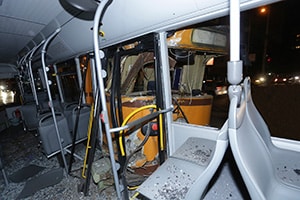
A bus accident does not have to involve a rollover or a multivehicle crash to cause a serious injury. A passenger may be thrown to the floor when a driver brakes suddenly. Someone boarding the bus may fall when it pulls away too soon. A pedestrian, bicyclist, or driver may be struck because the bus operator failed to check a blind spot.
These claims can become complicated quickly. Depending on the type of bus involved, responsibility may rest with a public transit agency, school district, private charter company, tour operator, bus manufacturer, maintenance contractor, or another driver. Claims involving a government-owned bus may also be subject to a much shorter deadline than an ordinary personal injury lawsuit.
Banner Attorneys represents passengers, motorists, pedestrians, bicyclists, and families affected by bus accidents in Fontana and throughout the Inland Empire. Attorney Brian Banner has spent more than a decade advocating for injured people and understands the medical, financial, and personal disruption that can follow a serious collision.
Call (909) 681-1622 or contact our office online to request a free consultation with a Fontana bus accident attorney. There are no attorney’s fees unless we obtain compensation for you.
Representing People Injured in Fontana Bus Accidents
Fontana residents use buses for work, school, medical appointments, airport transportation, church activities, organized tours, and daily travel throughout San Bernardino County. Public transit and private passenger carriers share busy roads with cars, commercial trucks, motorcycles, bicycles, and pedestrians.
A bus’s size creates risks that are not present in a typical passenger vehicle. It requires more room to turn, has substantial blind spots, and may carry standing passengers who have little protection during an abrupt stop or collision.
Our firm handles claims involving:
- Public transit buses
- Omnitrans buses
- School buses
- Charter buses
- Tour buses and motorcoaches
- Airport and hotel shuttles
- Church and nonprofit buses
- Casino buses
- Employee transportation buses
- University and campus shuttles
- Paratransit vehicles
- Private minibuses and passenger vans
- Interstate passenger carriers
Who Can File a Bus Accident Claim?
Bus accident claims are not limited to passengers. Anyone injured because of the operation, condition, or maintenance of a bus may have grounds to pursue compensation.
Potential claimants may include:
- A passenger injured inside the bus
- A driver or passenger in another vehicle
- A pedestrian struck at an intersection or bus stop
- A bicyclist or motorcyclist hit during a turn or lane change
- A passenger injured while boarding or exiting
- A child injured on a school bus
- A person using a wheelchair or mobility device
- A family pursuing a wrongful death claim
You may have a claim even when the bus never collided with another vehicle. A sudden start, hard stop, defective step, broken handrail, unsecured wheelchair, or prematurely closing door can cause substantial injuries.
Why Bus Accident Cases Are Different
Several issues can make a bus accident case more difficult than an ordinary car accident claim.
The Bus May Be Operated by a Government Entity
A public transit authority, city, county, school district, or other government agency may own or operate the bus. Claims against public entities are subject to special notice procedures and shorter deadlines.
Before filing a lawsuit, an injured person generally must present a written administrative claim to the proper government entity. Under California Government Code section 911.2, a claim involving personal injury or death generally must be presented within six months after the claim accrues.
Filing the administrative claim does not necessarily complete the process. A separate deadline may apply after the agency rejects the claim. Waiting for the ordinary two-year personal injury deadline can therefore be a costly mistake.
Several Companies May Be Involved
The company whose name appears on the bus may not own the vehicle, employ the driver, perform the maintenance, or organize the trip. A charter arrangement may involve a tour company, transportation broker, vehicle owner, driver-employment company, and maintenance contractor.
Each party’s role should be investigated before accepting an insurer’s version of who is responsible.
Important Evidence May Be Controlled by the Operator
Bus companies and transit agencies may possess surveillance video, GPS records, maintenance reports, driver schedules, training files, passenger records, dispatch communications, and onboard data. Some records may be routinely deleted or overwritten unless steps are taken to preserve them.
There May Be Many Injured People
A serious bus crash can produce claims from dozens of passengers and occupants of other vehicles. Available insurance coverage may become a contested issue, particularly when injuries are severe or several people seek compensation under the same policy.
Common Causes of Bus Accidents in Fontana
A meaningful investigation looks beyond the fact that a crash occurred. It asks why the driver made a particular decision, whether the vehicle was safe, what the operator knew before the accident, and whether another person or company contributed to the danger.
Distracted Driving
Bus drivers must watch the roadway while also monitoring traffic around a large vehicle. Phones, dispatch equipment, onboard conversations, navigation devices, passengers, and fare-related tasks can divert attention at a critical moment.
Driver Fatigue
Early routes, late-night trips, long charter assignments, and inadequate rest can affect reaction time and judgment. Federal passenger-carrier rules may apply to some interstate or for-hire operations. The Federal Motor Carrier Safety Administration provides guidance for determining when those regulations apply.
Unsafe Speed
A bus driver must account for traffic, road conditions, passenger movement, weather, visibility, and the vehicle’s size. A speed that might be manageable for a car may be unsafe for a bus approaching a curve, congested intersection, or sudden traffic slowdown.
Sudden Starts and Stops
Passengers may be standing, walking toward an exit, placing items in a rack, or moving to a seat. Pulling away before passengers are seated or braced can cause falls. Abrupt braking can also throw riders into seats, poles, doors, or other passengers.
The California Commercial Driver Handbook instructs bus drivers to make sure passengers are safely aboard before moving and to start and stop as smoothly as possible.
Unsafe Lane Changes and Turns
Buses have significant blind spots. A driver who changes lanes, merges, or turns without checking carefully may strike a nearby car, motorcycle, bicycle, or pedestrian.
Failure to Yield
Many bus crashes occur at intersections, crosswalks, and transit stops. A driver may fail to yield while making a left or right turn, entering traffic, or pulling away from a curb.
Poor Vehicle Maintenance
Bus operators are responsible for keeping passenger vehicles in safe operating condition. Problems involving brakes, tires, steering, lights, doors, wheelchair lifts, seats, handrails, steps, and emergency exits can place passengers and other road users in danger.
Inadequate Driver Screening or Training
A transportation company may be responsible when it hires an unqualified driver, overlooks a poor driving record, fails to provide proper instruction, or allows a driver to operate an unfamiliar vehicle without adequate training.
Dangerous Bus Stops or Road Conditions
Some accidents involve a poorly designed stop, inadequate lighting, broken pavement, missing warnings, dangerous construction zone, obstructed view, or other roadway defect. When a public entity controls the property or roadway, special government-claim rules may apply.
Passenger Injuries Without a Collision
Passengers are sometimes told that they cannot have a claim because the bus did not hit anything. That is not necessarily true.
A bus operator must use reasonable care while carrying passengers. Depending on the facts, a claim may arise when a passenger is injured because:
- The bus pulled away before the passenger sat down
- The driver stopped or accelerated abruptly
- The doors closed on the passenger
- The driver parked too far from the curb
- A step or floor surface was wet or defective
- A handrail or seat was broken
- The wheelchair lift malfunctioned
- A mobility device was not properly secured
- Luggage or another object fell inside the bus
- The passenger was discharged in an unsafe location
These cases often depend on surveillance footage and witness accounts. Reporting the incident promptly and obtaining identifying information for the bus, route, driver, and witnesses can be important.
Who May Be Liable for a Bus Accident?
The legally responsible party depends on who operated the bus, who employed the driver, what caused the accident, and whether a defective vehicle or dangerous property condition played a role.
Potential defendants may include:
- The bus driver: A driver may be responsible for distraction, speeding, unsafe turns, fatigue, impairment, or another negligent act.
- A private bus company: An operator may be liable for its driver’s conduct as well as negligent hiring, training, scheduling, supervision, or maintenance.
- A public transit agency: A government entity may be responsible for the conduct of its employee or a dangerous condition under its control.
- A city, county, or school district: A public agency may own the bus, employ the driver, control the bus stop, or be responsible for the roadway.
- A charter or tour company: A company that organized or sold the transportation may bear responsibility depending on its role and conduct.
- A maintenance contractor: A repair company may be liable when careless work or a missed defect contributes to an accident.
- A vehicle or parts manufacturer: Defective brakes, tires, doors, seats, lifts, steering systems, or other components may support a product liability claim.
- Another driver: A separate motorist may cause or contribute to a collision involving the bus.
- A property owner: Dangerous pavement, lighting, walkways, or boarding areas may contribute to a passenger’s injury.
California allows fault to be allocated among multiple parties. Identifying everyone who contributed to the accident can be crucial when injuries are serious or available insurance is disputed.
Evidence Used in a Bus Accident Investigation
Bus accident claims may involve evidence that is unavailable in an ordinary car accident case. Depending on the incident, an attorney may seek:
- Interior and exterior surveillance footage
- Traffic-camera or nearby business video
- GPS and route data
- Electronic vehicle information
- Driver logs and work schedules
- Dispatch communications
- Driver qualification and training files
- Drug and alcohol testing records
- Pre-trip and post-trip inspection reports
- Maintenance and repair histories
- Prior complaints involving the driver or vehicle
- Passenger manifests and fare records
- Police or transit-agency reports
- Witness statements
- Photographs of the bus and accident scene
- Medical records documenting the injuries
A preservation notice may be sent to the transit agency, school district, charter company, or other responsible organization instructing it to retain relevant evidence. Because video and electronic records may be overwritten, early action can make a significant difference.
What to Do After a Bus Accident
Your immediate priority should be your health. After an accident or injury aboard a bus, take the following steps when possible:
- Call 911 when emergency help is needed. Request police and medical assistance after a collision or serious injury.
- Seek medical care. Do not assume an injury is minor because symptoms are delayed.
- Report the incident. Notify the driver, transit agency, school, tour organizer, or bus company.
- Identify the bus. Record the route number, bus number, license plate, location, direction of travel, and time.
- Obtain the driver’s information. Get the driver’s name or employee number when available.
- Take photographs. Document the bus, damaged vehicles, road conditions, steps, doors, seats, handrails, floor, and visible injuries.
- Speak with witnesses. Ask other passengers and bystanders for their names and contact information.
- Preserve your fare or trip records. Keep tickets, electronic receipts, itinerary documents, school notices, and booking confirmations.
- Do not sign a release immediately. The extent of an injury may not be clear in the first few days.
- Determine whether a government entity is involved. The administrative claim deadline may arrive much sooner than expected.
Common Bus Accident Injuries
Passengers often have no seat belt and may be standing when an accident occurs. A sudden movement can throw them against the floor, seats, windows, railings, doors, or other riders.
Bus accidents may cause:
- Traumatic brain injuries
- Concussions
- Spinal cord injuries
- Neck and back injuries
- Herniated discs
- Broken hips, wrists, arms, or legs
- Shoulder and knee injuries
- Internal bleeding
- Facial injuries
- Cuts and scarring
- Crush injuries
- Burns
- Amputations
- Psychological trauma
Older adults, children, and people with disabilities may be particularly vulnerable to falls and sudden movement inside a bus.
Compensation Available After a Bus Accident
A personal injury claim is intended to account for the losses caused by the accident. The amount available depends on the evidence, severity of the injuries, future prognosis, effect on employment, insurance coverage, and identity of the responsible parties.
Recoverable damages may include:
- Ambulance and emergency room expenses
- Hospital care
- Doctor and specialist visits
- Surgery
- Physical and occupational therapy
- Medication
- Medical equipment
- Future treatment and rehabilitation
- Lost wages
- Loss of future earning capacity
- Property damage
- Transportation and other out-of-pocket costs
- Pain and suffering
- Emotional distress
- Physical impairment
- Loss of enjoyment of life
In a fatal bus accident, eligible family members may be able to pursue a wrongful death claim for losses such as funeral expenses, financial support, household services, companionship, guidance, care, and protection.
How Long Do You Have to File a Bus Accident Claim in California?
The deadline depends heavily on whether the bus was privately or publicly operated.
Claims Against a Public Entity
When a city, county, transit agency, school district, or other public entity is involved, California law generally requires a written government claim relating to personal injury or death to be presented within six months.
The claim must be directed to the correct entity and include specific information. After the claim is accepted, rejected, or left unanswered, additional procedural rules and filing deadlines apply.
Six months can pass quickly while a person is recovering, determining who operated the bus, requesting records, and dealing with medical treatment. Contacting an attorney early can help avoid losing a claim because of a procedural deadline.
Claims Against Private Companies
Under California Code of Civil Procedure section 335.1, many personal injury and wrongful death lawsuits against private parties must be filed within two years.
Exceptions may shorten or extend the time available. A claimant should not assume that the two-year period applies without first identifying every responsible party.
How Banner Attorneys Can Help
A bus accident claim should be based on evidence, not assumptions made by the operator or its insurance company. Our work may include:
- Determining who owned and operated the bus
- Identifying the driver’s employer
- Investigating whether a government entity is involved
- Preparing and presenting a government claim when required
- Sending evidence-preservation notices
- Requesting surveillance footage and electronic records
- Reviewing driver and maintenance files
- Interviewing passengers and other witnesses
- Examining available insurance policies
- Documenting medical treatment and future needs
- Calculating wage loss and reduced earning capacity
- Working with qualified experts when necessary
- Negotiating with insurers and public agencies
- Preparing the case for litigation when a fair resolution is not offered
Attorney Brian Banner began working directly with personal injury clients before attending law school. He has since handled litigation and represented injured people navigating the same medical and insurance systems that often feel overwhelming after an accident.
Clients deserve direct communication and honest guidance. Our firm explains what is happening, what evidence matters, and what options are available at each stage of the case.
Frequently Asked Questions (FAQs)
Who can be held liable in a bus accident case?
Liability may involve multiple parties, including the bus driver, the bus company, or other drivers who contributed to the crash. Sometimes, mechanical failures or inadequate maintenance by the bus company can also create liability. A skilled attorney can investigate your case and identify all responsible parties.
What types of injuries can result from a bus accident?
Bus accidents can cause severe and life-altering injuries, including head trauma, spinal cord injuries, paralysis, burns, broken bones, and brain injuries. Even minor collisions can result in serious soft tissue injuries, chronic pain, or long-term medical care needs.
Can I recover compensation for a bus accident in Fontana?
Yes. Injured passengers may be entitled to compensation for medical expenses, lost wages, future medical care, pain and suffering, emotional distress, property damage, and in wrongful death cases, for funeral costs and loss of companionship. An experienced Fontana bus accident attorney can help calculate your damages and negotiate with insurance companies or represent you in court if needed.
Contact a Fontana Bus Accident Attorney
A transit agency, school district, or private bus company may begin reviewing the incident immediately. Video can be overwritten, vehicles can be repaired, and witnesses can become difficult to locate. When a public entity is involved, the deadline for presenting a claim may be only six months.
Banner Attorneys represents people injured in bus accidents in Fontana and throughout the Inland Empire. Our Fontana office is located at 9161 Sierra Avenue, Suite 201C, Fontana, California 92335.
Call (909) 681-1622 or contact our Fontana bus accident lawyer to request a free, confidential consultation.

